You finished your makeup, misted setting spray over everything — and nothing happened. Or worse: white dots appeared where the spray landed. Or your makeup looked fine for an hour, then slid apart faster than it does on a no-spray day.
“Setting spray not working” sounds like one problem. It isn’t. A spray can fail at the bottle (uneven output, a clogged-feeling nozzle), at the label (the product never promised wear in the first place), at the timing (sprayed over layers that were still wet), or it can seem to fail when nothing about it changed except your expectations. Each of those is a different diagnosis, and each has a different check.
This guide works the way this publication always works: what changed → where the failure most likely sits → how to check it with one variable at a time → what to change. One honest statement up front: these checks suggest; they don’t deliver a definitive diagnosis. Wear through a day involves weather, touching, and your skin, and no home test controls all of that.
Scope note, once: This guide diagnoses the spray step itself — bottle output, visible spotting, the label promise, application distance, timing, and bottle condition — rather than re-diagnosing every reason makeup can fade. Pigment ending up on your collar, blush color vanishing by noon, and makeup that was cakey before you sprayed each have their own guides on this site, and we’ll point you to them below.
The short answer
A setting spray “not working” usually resolves into one of four visible outcomes:
- Nothing changed. The spray made no noticeable difference — and the first suspect is the promise on the bottle, because products under this name range from hydration-and-refresh sprays to claims of 36-hour wear.
- White spots or droplets appeared. The failure is visible at the moment of spraying: uneven mist, spitting, or droplets beading where they landed.
- Makeup looked worse immediately. The spray went over layers that were still wet, or landed too close and too heavy, and moved what was underneath.
- It looked fine, then wore worse later. This is the only outcome that needs a wear test — and the one where everything except the spray is hardest to rule out.
The fastest way to sort your case: what changed right after you sprayed? Four branches, a handful of one-variable tests, then the fix that matches.
Start Here: What Changed Right After You Sprayed?
Answer from the mirror, then jump to your branch.
Nothing changed. You can’t see a difference, and wear feels the same as a no-spray day. Go to Branch A — start at the label, not your technique.
White spots or droplets appeared. Visible white dots, speckles, or wet beads sitting where the mist landed. Go to Branch B — this branch is observation and output tests only.
It looked worse immediately. Makeup shifted, streaked, or went patchy within moments of spraying. Go to Branch C — timing and distance first.
Fine at first, worse later. The finish looked good, then broke down earlier or uglier than usual. Go to Branch D — and bring your patience, because this branch’s test runs for hours, not seconds.
One sequencing rule before you start: if white spots or uneven output show up at all, clear Branch B first. A bottle that spits will contaminate every other test you run — you’ll end up diagnosing your foundation for a nozzle problem.
Branch A: Nothing Changed — Read the Label Before You Blame Your Technique
If a spray makes no visible difference, the most under-checked suspect is the promise printed on the bottle.
Products sold as setting sprays do not all claim the same thing. MAC’s original Fix+ is officially described as a spray that “hydrates, primes, sets and refreshes” — a hydration-and-finish promise, not a wear or transfer-resistance claim. Urban Decay’s All Nighter page, by contrast, claims “Up to 24-hour wear,” “Waterproof,” and “Transfer-resistant.” L’Oréal’s Infallible setting mist claims prevention of “smudging, fading, and transfer for up to 36 hours.” Those are three different promises wearing one category name. A spray sold on hydration and refresh hasn’t failed when it doesn’t extend wear — read against its own label, wear was never the promise it made.
That’s also why you can’t sort sprays by the word on the front. Brands use setting, fixing, and finishing inconsistently — one brand’s single product family carries both a hydrate-and-refresh claim and a lock-it-in claim under nearly the same name. The category word tells you almost nothing; the claim sentence on your specific bottle tells you what you actually bought.
How to check. Read your bottle’s claim language first. Does it promise wear, transfer resistance, or waterproof performance — or does it promise hydration, refresh, a radiant or dewy finish? Then run the half-face test (detailed below): your full routine on both sides, spray on one side only, and read both sides at application and again after a few hours. If the sprayed side and the unsprayed side age identically across a few repetitions, that points toward the spray making no noticeable contribution for you — whatever its label says.
What to change. If your bottle’s promise is hydration or finish, judge it on that: does your makeup look fresher, less powdery, more skin-like after spraying? If you bought it expecting wear extension, the mismatch is between the purchase expectation and the label — and extra layers of the same spray don’t rewrite what the label promised.
What NOT to change yet. Your whole routine. Don’t buy a second spray, switch foundations, or add powder layers until the half-face test tells you whether the spray does anything at all.
Branch B: White Spots or Droplets — An Output Problem You Can See
White dots, speckles, or visible droplets where the mist landed are the most mechanical failure on this page — and the one where honesty about evidence matters most. Here it is plainly: no reliable source we could find establishes a chemical mechanism for these spots, so this branch will not give you one. What it gives you is a sequence of observations that isolates where the spots come from: the bottle’s output, your distance, or a changed product.
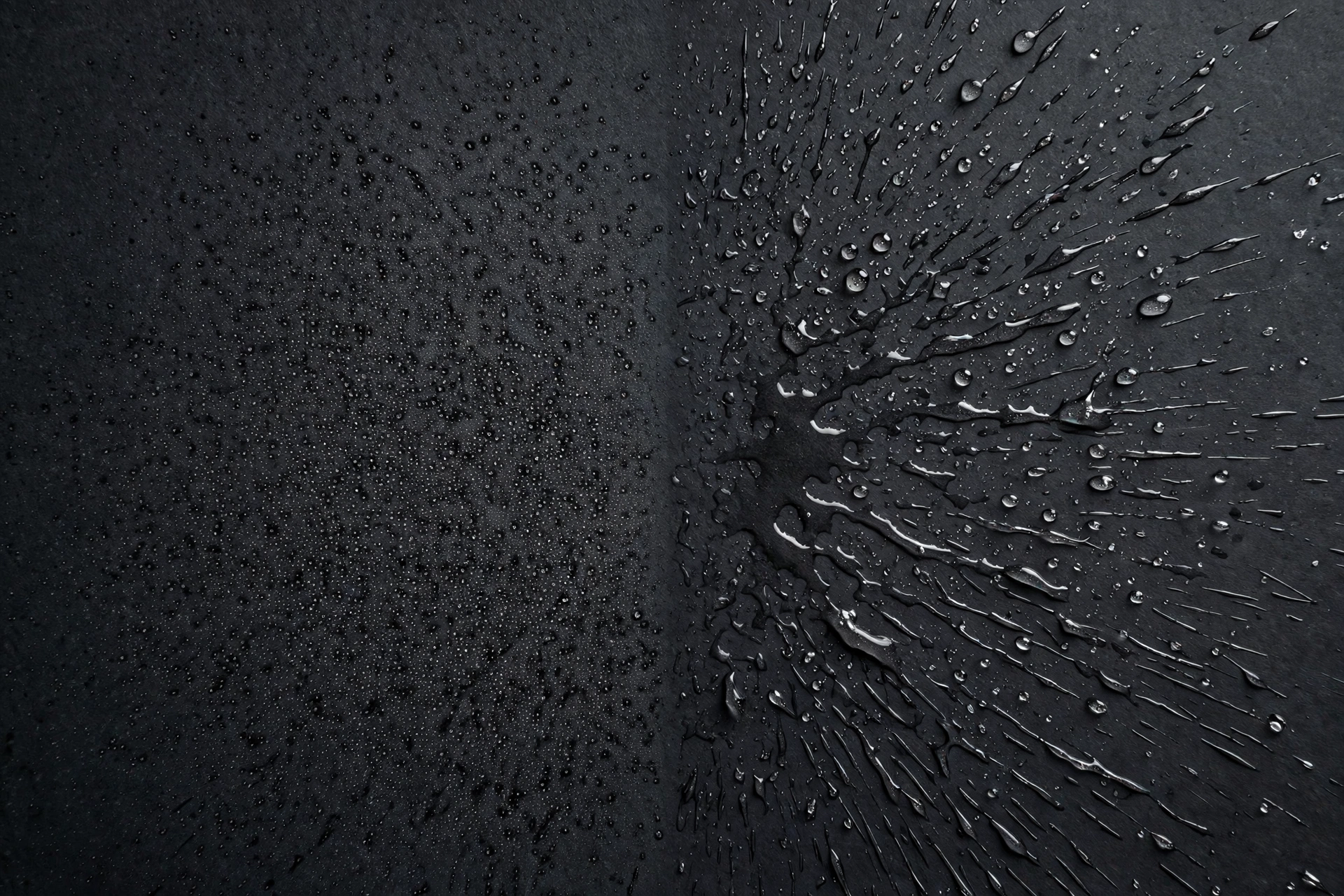
Check 1 — the spray-pattern test. Before the spray touches your face again, spray it onto a dark tissue or card from roughly the distance your label gives. A healthy output reads as an even, fine mist. Spitting, streaks, or large beading droplets mean the bottle’s output is uneven — and uneven output on a card will be uneven output on your face.
Check 2 — shake, only if your label asks for it. Some sprays must be shaken: e.l.f.’s bi-phase setting spray instructs users to “shake spray to activate the bi-phase formula,” and Urban Decay and L’Oréal also instruct shaking. Others — MAC’s sprays, for example — never mention it. If your label instructs shaking, repeat the pattern test after shaking and compare. If it doesn’t, skipping the shake proves nothing either way.
Check 3 — isolate the nozzle from the liquid. If the pattern stays uneven, the question is whether the problem sits in the nozzle or in the product itself. For a pump bottle (never an aerosol — do not try to open, transfer, or take apart a pressurized can), you can move the liquid to a clean spare mister bottle and repeat the pattern test. Same spots from a different nozzle point toward the product; a clean pattern points back at the original nozzle.
Check 4 — distance comparison. Repeat the pattern test at your label’s distance versus noticeably closer. Brands’ own documented distances run from about 6 to 12 inches — Urban Decay says 8 to 10 inches, e.l.f.’s bi-phase says 6 inches, one Milani mist says 8–10 inches — so use your label’s number, not a universal one. Droplets that merge into an even pattern at label distance but bead up close tell you the deposition distance was the variable.
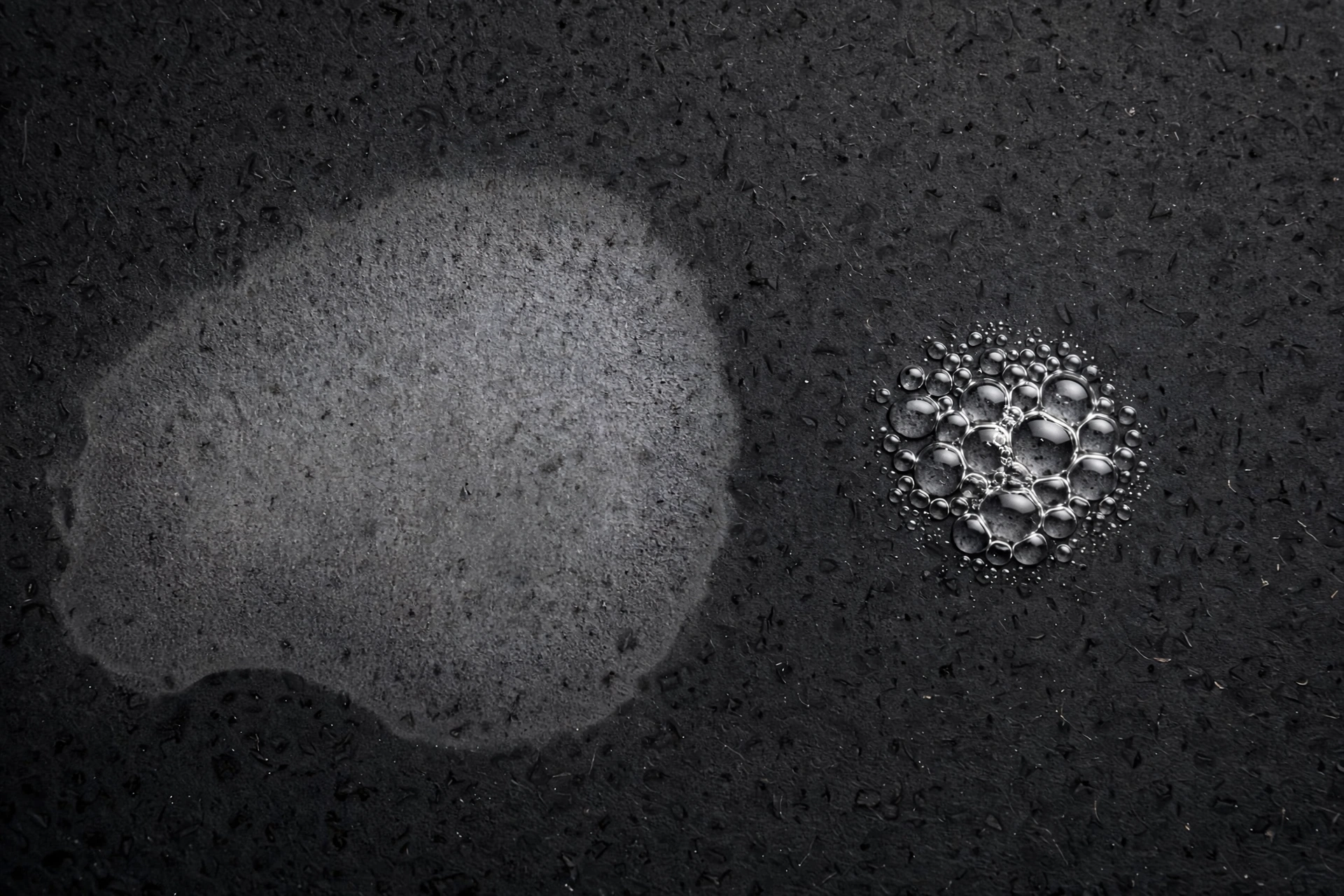
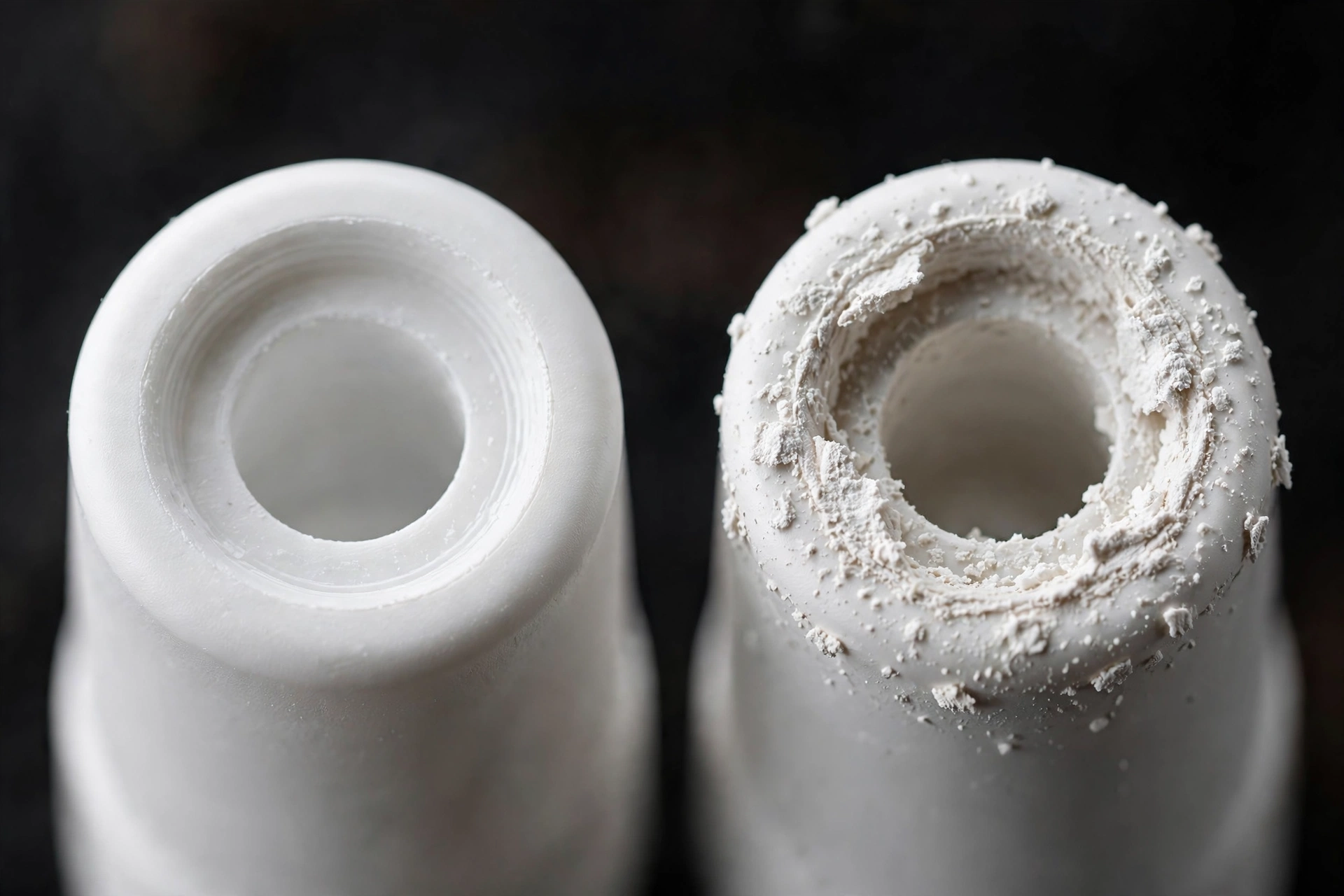
Check 5 — nozzle care and product condition. Follow the cleaning instructions for your specific bottle, if the manufacturer provides them — Milani, for instance, tells Microfine users to “gently wipe the noddle clean after each use.” That’s one brand’s instruction for its own product; there is no universal nozzle-cleaning recipe, and pins, solvents, and disassembly are not part of this guide. Finally, look at the product itself: has its color shifted, has it separated, does it smell off, does the texture feel different from when it was new? A changed product is a discard candidate on signs, not on dates — more on that below.
What spots are not. White droplets you can see in the mirror, sitting where the mist landed, are a spray-output issue. Whiteness that shows up only in flash photos while your face looks normal in person is a different problem — flashback — and it has its own guide on this site.

Branch C: Worse Immediately — Timing and Landing, Not Chemistry
If makeup shifts, streaks, or goes patchy within moments of spraying, the prime suspects are when the spray landed and how it landed — not ingredient warfare underneath.
Still-wet layers. Spraying over foundation or concealer that hasn’t dried down gives the mist something mobile to push around. Professional guidance is consistent on the application side: light layers, let each one dry, and aim for a mist that lands “misty, not dripping.” You can test this directly with the dry-layer vs still-wet-layer test: same routine on both sides of your face, let one side dry fully before spraying, spray the other side while it’s still tacky, and compare how each side looks immediately. A side that only misbehaves when sprayed wet has told you the timing was the variable — an observation about your routine, not a verdict about any ingredient.
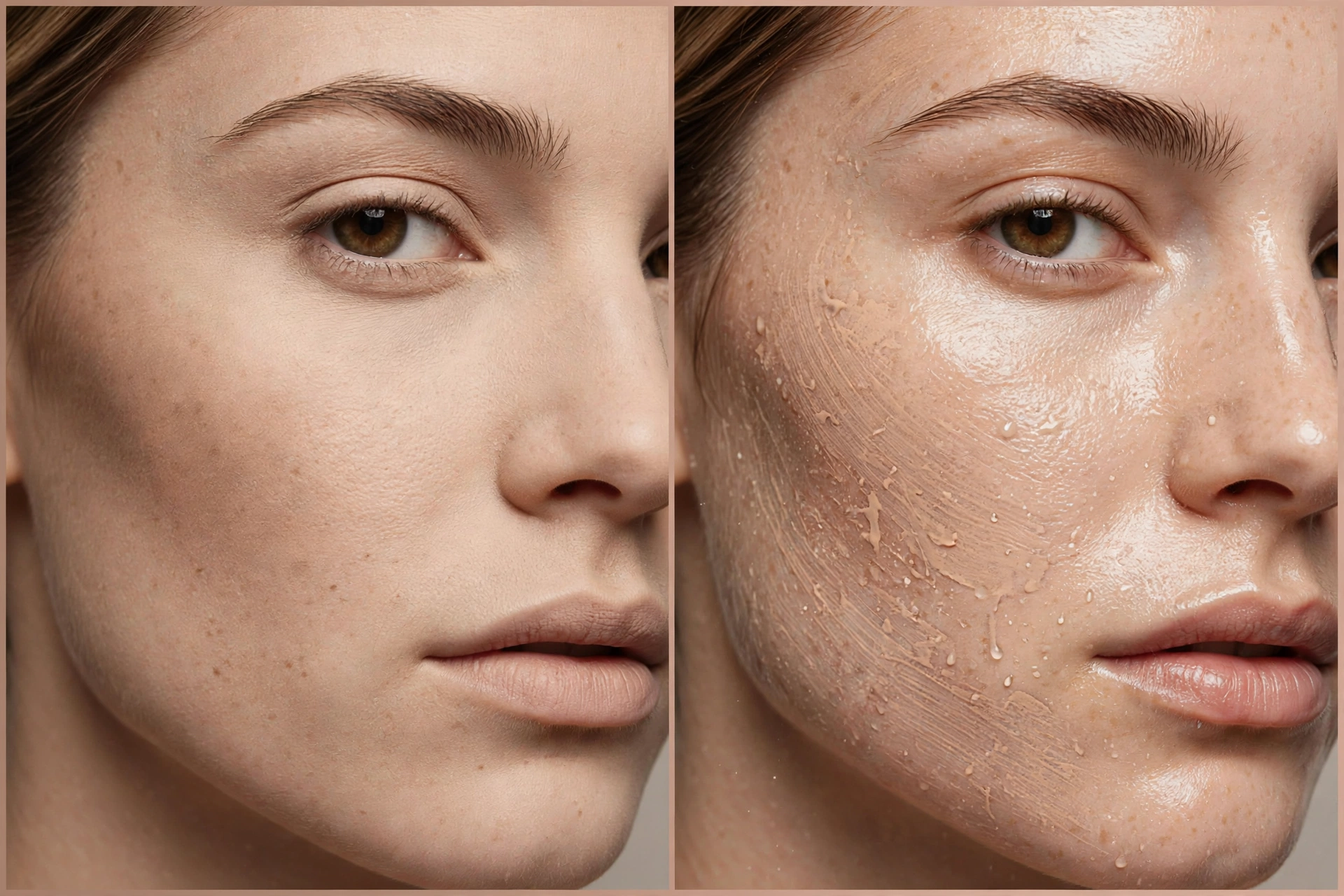
Distance and amount. Too close or too much liquid concentrates the spray into beads instead of a veil — the same droplet problem as Branch B, landing on wet makeup instead of a tissue. Repeat the pattern test on a card, then match your label’s distance before you change anything else.
What this branch is not. If the product underneath rolls, balls up, or flakes when you touch it, that’s pilling — a film failure the spray didn’t cause and can’t fix; our pilling guide owns the layer-isolation diagnosis. And if your makeup was heavy, dry, and textured before you sprayed, that’s cakey makeup — our cakey guide owns it; a mist softening the look of powder is not a wear result.
Branch D: Fine at First, Worse Later — The Branch That Needs Hours, Not Seconds
A spray that looks good at the mirror and then seems to wear worse is the hardest failure to diagnose, because everything that happens to a face over a day conspires against clean conclusions: heat, humidity, touching, phone contact, and the layers under the spray all change hour by hour. None of those can be named as your cause until a comparison isolates the spray itself.
The test is the half-face wear test. Same routine both sides; spray one side only. Read immediately (both sides should match), then check at intervals. If the sprayed side consistently breaks down earlier across a few repetitions, the spray is a genuine suspect for you. If both sides age the same across repetitions, that points away from the spray as the variable — and consider that the “failure” may be an expectation mismatch: a dewy or hydrating finish can simply look less “set” by hour six, whether or not its wear actually changed.

Bottle condition belongs here too. A spray that used to behave and no longer does earns the same signs check as Branch B: odor, color, texture, separation. A product whose condition has changed has no obligation to deposit the way it did when it was new, and no routine adjustment fixes a changed product.
Refer out when the symptom is a neighbor’s. If the “wearing worse” is actually pigment on your collar, phone, or hands, that’s transfer, and our transfer guide owns that diagnosis — including its own setting-spray section. If it’s specifically blush color disappearing by midday, our blush guide owns it, including the spray test it uses. This article’s Branch D is only for a face that looks fine after spraying and then degrades in a way that isn’t transfer and isn’t one product’s color fading.
The Six One-Variable Tests
Every check in this guide reduces to six tests. Each changes exactly one variable; each states what it isolates and what it does not prove.
| Test | What it isolates | What it does NOT prove |
|---|---|---|
| 1. Spray-pattern test — spray onto a dark tissue or card from your label’s distance | The bottle’s output: even mist vs spitting or large droplets | Anything about wear, or about how the spray behaves on skin |
| 2. Shake-if-instructed test — repeat the pattern test after shaking, only if your label instructs shaking | Whether shaking (where required) changes this bottle’s output | That skipping a shake caused spots on your face previously; anything about sprays whose labels don’t ask for shaking |
| 3. Distance comparison — pattern test at your label’s distance vs noticeably closer | Whether deposition distance changes droplet size and merging for this product | Any universal “correct” distance — labels document roughly 6 to 12 inches |
| 4. Bottle/nozzle isolation — pump bottles only: move the liquid to a clean spare mister and repeat the pattern test | Nozzle vs liquid as the source of uneven output | Anything about aerosol sprays (never open or transfer a pressurized can); chemical quality of the liquid |
| 5. Dry-layer vs still-wet-layer test — same routine, one side sprayed after drying, the other while tacky | Whether spraying over wet layers moves your makeup | A general ingredient-compatibility rule; anything beyond this routine’s observed behavior |
| 6. Half-face spray/no-spray test — same routine, spray one side only; read at application and after hours | Whether the spray makes any noticeable difference for you — finish now, wear later | Clean proof of wear extension or failure; weather, touch, and asymmetric wear confound every run |
Tests 1–5 resolve in one session. Test 6 is a wear test: suggestive when the same result repeats, never definitive from a single day.
Read the Label, Not the Category Name
If this guide has one habit to leave you with, it’s this: the word on the front of the bottle is marketing; the claim sentence is the contract.
The evidence is in how wildly the promises spread under one name. A hydrating refresh spray and a 36-hour transfer-resistance claim are both sold as “setting spray.” Instructions spread just as wide: one brand requires shaking to activate a two-phase formula and says to hold the bottle 6 inches away; another says shake well, hold 8 to 10 inches, and spray at least ten times in an X and T; a third gives a distance and no count at all. Official pages for a single brand have been documented disagreeing with themselves about distance. There is no category rule hiding underneath all that — there is only your bottle’s label, which is why every test above starts from your instructions.
So before you conclude a spray “doesn’t work,” ask what it actually promised you: hydration or wear? A dewy finish or transfer resistance? A spray judged against a promise it never made will fail every time — and a spray judged against its real promise sometimes turns out to be doing its job.
What the Ingredient List Can — and Cannot — Tell You
If you read ingredient lists, you’ll meet three names often in wear-claiming sprays: PVP, VP/VA copolymer, and acrylates copolymer. Ingredient databases such as the EU’s CosIng (mirrored in technical references like SpecialChem) describe these ingredients with a film-forming function — their role in a formula is to form a film.
Now the boundary, plainly: ingredient-list presence does not tell you the concentration, the film strength, or how many hours the finished product will last. Two products can share an ingredient list and behave differently, because concentration, the rest of the formula, and the spray hardware all sit between an ingredient’s job description and your face. Treat a film-former on the list as a clue about what the formula is designed to attempt — never as proof of what it will do, and never as a way to rank one spray against another.
Bottle Condition and the Little Open-Jar Symbol
Two calendar-flavored beliefs cause a lot of misdiagnosis, so let’s separate them.
The open-jar symbol (PAO). The small jar icon with “12M” or similar is the European period-after-opening mark: a post-opening safety window in the EU regulatory framework. It does not certify that a product performed perfectly until that month, and it does not prove a product failed the day after — and a product can show change signs well before any window closes. US cosmetics, for their part, are not generally required to print expiration dates at all.
Signs over dates. FDA’s cosmetics shelf-life guidance treats expiration dates as “rules of thumb” and warns that improperly stored products — heat and sunlight are the classic culprits — can deteriorate substantially before them. The practical check is therefore the product itself: an off or changed odor, a visible color shift, separation, or a texture that’s turned grainy, stiff, or runny compared with when it was new. A spray showing those signs is a retire-it candidate, and — closing the loop with Branch B — a changed product can also explain a spray pattern that wasn’t always uneven.
Safety, at label level. Follow your bottle’s own directions: labels commonly instruct keeping eyes and mouth closed while spraying, not inhaling the mist, keeping aerosols away from flame, and stopping use if irritation occurs. That’s the level this guide stays at — your product’s label is the authority for your product.
When the Problem Belongs to Another Guide
- Pigment on your collar, phone, or hands; makeup rubbing off on contact → that’s transfer. Our guide on why foundation transfers owns it — including whether a setting spray can help there.
- Blush color specifically fading away during the day → our guide on why blush disappears so fast owns that diagnosis, spray questions included.
- Eyeliner smudging or traveling → our eyeliner smudge guide owns it by zone.
- Makeup heavy, dry, and textured before you spray → why foundation looks cakey.
- Product rolling or balling up when touched → why foundation is pilling — and remember the rule from that guide: spray does not re-bond a sheared film.
- Face looks fine in person but white in flash photos → foundation flashback. Visible droplets in the mirror are this article; flash-only whiteness is that one.
FAQ
Why does my setting spray leave white spots?
Visible spots mean something landed unevenly — and you can isolate what. Run the spray-pattern test on a dark tissue, shake only if your label instructs it, compare your label’s distance against closer, and (pump bottles only) try the liquid from a clean spare mister. No reliable source establishes a chemical mechanism for the spots, so this guide stays with what you can observe: output, distance, and product condition.
Why does my setting spray seem to do nothing?
Start with the promise on the bottle. Many sprays are sold on hydration, refresh, or finish and never claim extended wear — judged against a wear promise they never made, they’ll always look useless. The half-face test is the cleanest check: spray one side only, and if both sides age identically across a few days, that points toward the spray making no measurable contribution for you.
Should I shake my setting spray?
Only if your bottle says so. Some formulas require it — bi-phase sprays instruct shaking to activate — while several major brands’ instructions never mention shaking at all. There is no category-wide rule; your label is the instruction.
How far away should I hold the spray?
At the distance your product’s instructions give. Official brand instructions documented for this guide range from about 6 to 12 inches, and brands have disagreed with themselves across their own pages — which is exactly why a universal number would be invented. Too close is the failure mode to check first: it concentrates the mist into droplets.
Can setting spray make makeup look worse?
Yes, observably: sprayed over layers that are still wet, or held too close so it lands as droplets instead of mist, a spray can move the makeup under it. The dry-layer vs still-wet-layer test shows you whether timing is your variable. If the product underneath rolls or balls up instead, that’s pilling — a different failure with its own guide.
Does the ingredient list tell me how long a spray will last?
No. Databases describe ingredients like PVP, VP/VA copolymer, and acrylates copolymer as film formers — that’s their function in a formula. The list doesn’t reveal concentration, film strength, or hours of wear in the finished product, and products with similar lists can behave differently.
How can I test whether my setting spray is actually making a difference?
The half-face test: identical routine on both sides, spray on one side only, compare at application and again after a few hours, repeated on a few days. It suggests — repeated identical aging on both sides is good evidence the spray contributes nothing for you — but a single day never proves a wear claim either way.
Sources
Evidence tiers labeled honestly. Label claims are quoted as claims, not verified performance.
- MAC Cosmetics — Fix+ and Fix+ Stay Over (official product pages). Basis for promise variance within one brand family: original Fix+ described as hydrating/priming/setting/refreshing; Stay Over positioned on long-wear lock. (Brand claim, primary.)
- Urban Decay — All Nighter Setting Spray (official product page). “Up to 24-hour wear,” “Waterproof,” “Transfer-resistant”; instructions: shake well, hold 8 to 10 inches, spray in an “X” and “T” formation at least 10 times, close eyes and mouth. (Brand claim + instructions, primary.)
- L’Oréal Paris USA — Infallible 3-Second Setting Mist (official product page). “Prevents smudging, fading, and transfer for up to 36 hours”; shake thoroughly; ~10 inches, circular motion. (Brand claim + instructions, primary.)
- e.l.f. Cosmetics — Power Grip Dewy Setting Spray (official product page). “Shake spray to activate the bi-phase formula,” mist from 6″ away, eyes and lips closed. Basis for shake-required variance. (Brand instructions, primary.)
- Milani — Make It Last Microfine Mist (official product page). Up to 16 hours claim; waterproof/sweat-proof/transfer-proof claim language; 8–10 inches, zigzag; “gently wipe the noddle clean after each use.” Basis for manufacturer-specific nozzle care. (Brand claim + instructions, primary.)
- NYX Professional Makeup — setting spray pages. 16-hour and “No fading, smudging or transfer!” claim language; documented distance variance across official pages. (Brand claim, primary.)
- SpecialChem INCI ingredient pages — PVP (COSING REF 37364), VP/VA Copolymer (60160), Acrylates Copolymer (31648). “FILM FORMING” function listings; PVP described as creating a smooth, uniform film. Basis for ingredient function only. (Technical database.)
- Chemists Corner — on ingredient-list limits. “A clue, not a conclusion”; identical ingredient lists can behave differently. Basis for the INCI barrier. (Expert guidance.)
- Regulation (EC) No 1223/2009 (EUR-Lex). Period-after-opening defined as the time after opening for which the product is safe and can be used without harm to the consumer. Basis for the PAO boundary. (Regulatory.)
- U.S. FDA — Cosmetics Safety Q&A: Shelf Life (FDA text as republished via english.nmpa.gov.cn mirror; fda.gov page not directly opened). Expiration dates as “rules of thumb”; improperly stored products may deteriorate substantially before them. Basis for judging condition by signs, not calendar. (Regulatory guidance, relay-opened.)
- Professional application guidance (Urban Decay artistry via Who What Wear; retailer application guidance). Spraying over still-wet layers can smear makeup; aim “misty, not dripping.” Basis for Branch C timing guidance. (Professional practice.)
The limitation, stated plainly. No peer-reviewed study tests “why is my setting spray not working” as a consumer phenomenon, and the mechanism behind white spots is not established in any source we could open — this guide diagnoses spots by output observation only. Brand wear-hour numbers are label claims, quoted and attributed, never verified here. Every test above is a one-variable observation about your own bottle and routine; honestly labeled, that is what it’s for.