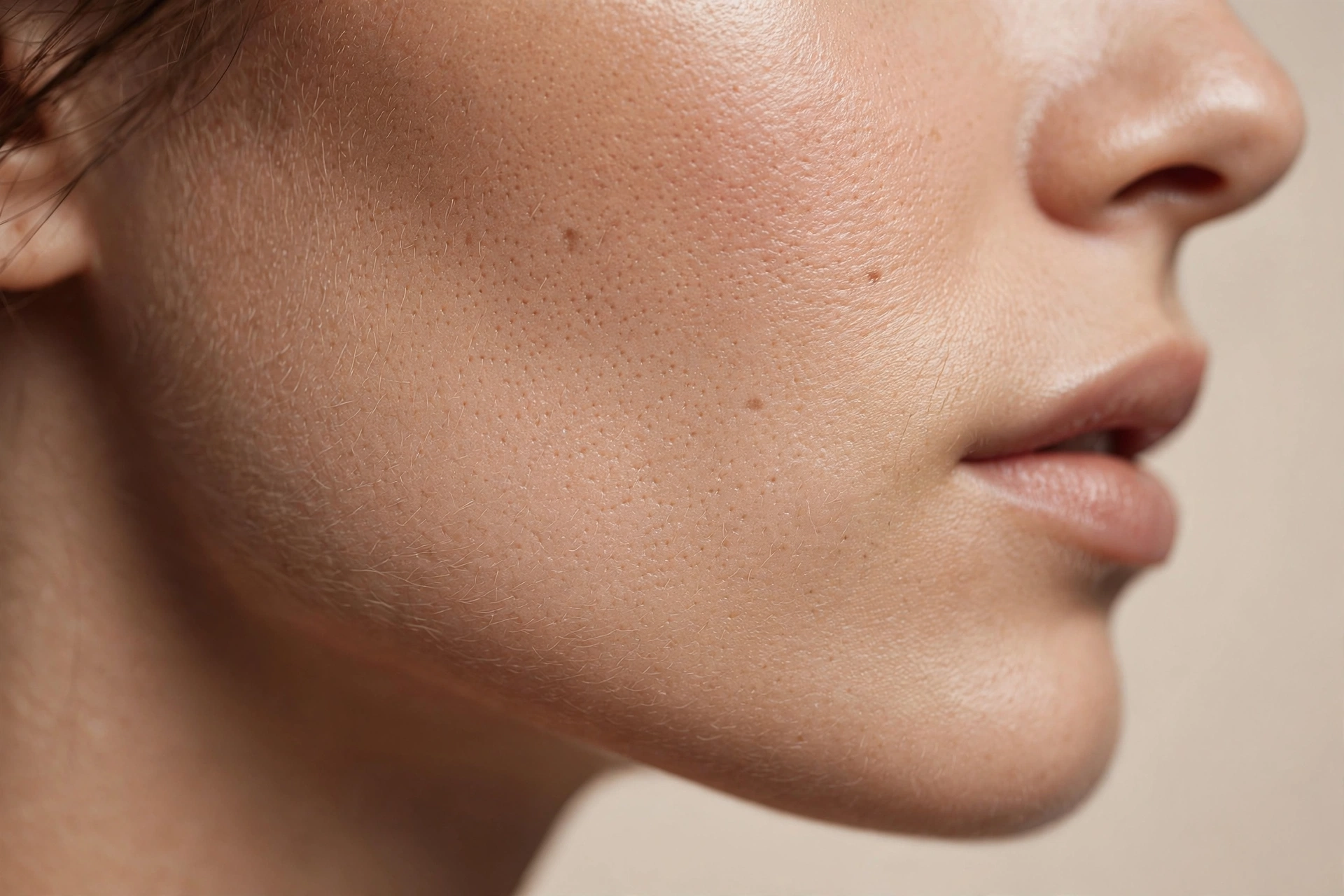
It matched in the morning. By evening, it’s a half-step darker and noticeably warmer — a different shade than the one you applied.
Most advice starts from a single word: oxidation. It sounds scientific and comes with a ready-made explanation — something in your makeup reacting with air or skin, the way a cut apple browns. That explanation is neat, repeatable, and mostly wrong. It’s a label stretched over at least four different things happening on your face, only some of which involve any chemistry at all.
This article works the way this publication always works: what you see → what it might be → how to distinguish it → how to test → what to change. The fix for each cause is completely different — and the wrong one wastes money on new foundations when the old one was never the problem.
The short answer
Most of what people call foundation “oxidation” is probably not true chemical oxidation — and if nothing is chemically reacting, hunting for “anti-oxidation” products won’t help. Understanding what’s actually shifting the color will. What users call oxidation may often involve one or more of these:
- Your skin’s oils (sebum) changing how light moves through the foundation film. Cosmetic chemist Valerie George, writing in Happi (January 2026) after consulting pigment expert Jane Hollenberg, describes how red iron oxides that weren’t fully wetted during manufacturing become wetted over time — and how sebum can further wet them out on skin, shifting the formula orange and darker in appearance. No chemical reaction; the pigments just become more visible.
- The formula drying down and losing its volatile ingredients. Formulator research by pigment supplier Uni-Powder (via the Covalo blog) measured how foundations lose weight as volatiles evaporate, lose gloss, and scatter less light — which reads to your eye as duller and darker.
- Sebum physically mixing into the film and changing its refractive index. In the same Uni-Powder research, when sebum mixes with foundation, light no longer travels through air to reach the film — it travels through sebum, which has a higher refractive index than air. Less light bounces back to your eye, so the foundation looks deeper. Again: no chemical change required.
- A shade that was simply wrong from the start, a product aging in the bottle over months, or lighting that flatters nothing.
Different causes, different fixes. Your job is to figure out which one you have — and the clock is your best instrument: when the color changes tells you more than any ingredient list.
What foundation “turning orange” actually looks like
Before diagnosing, define the signature — because people apply the word “oxidation” to at least four different visual problems, and only one of them is time-dependent darkening.
True time-dependent darkening has a specific pattern:
- At application, the match is correct. In natural light, the foundation looks like your skin.
- Over the course of the day, it drifts. It becomes deeper (darker) and warmer (more orange or reddish), most noticeably in oilier areas — the forehead, nose, and chin.
- A hand swatch made at the same time stays stable — or darkens far less. The single most important observation; we return to it below.
Now, what people mislabel as the same problem:
- It was never right. Too dark or too warm within the first minute, in every light. That’s the wrong shade or undertone — not darkening, so no time-based fix applies.
- It’s a texture problem, not a color problem. The makeup looks heavier, drier, or more obvious as the day goes on, but a side-by-side check shows the color hasn’t actually shifted. That’s a finish and wear issue — different diagnosis entirely (see “When it’s not oxidation at all” below).
- It only looks wrong in photos. In the mirror it’s fine; under flash or certain indoor light it’s a different face. That’s a lighting and camera interaction, not something happening to the formula on your skin.
- It’s rolling or balling up. Small balls or flakes forming during or after application are a layer-interaction problem, not a color-change problem.
Each of these has a different fix — which is exactly why this article exists as a decision process rather than a list of tips.
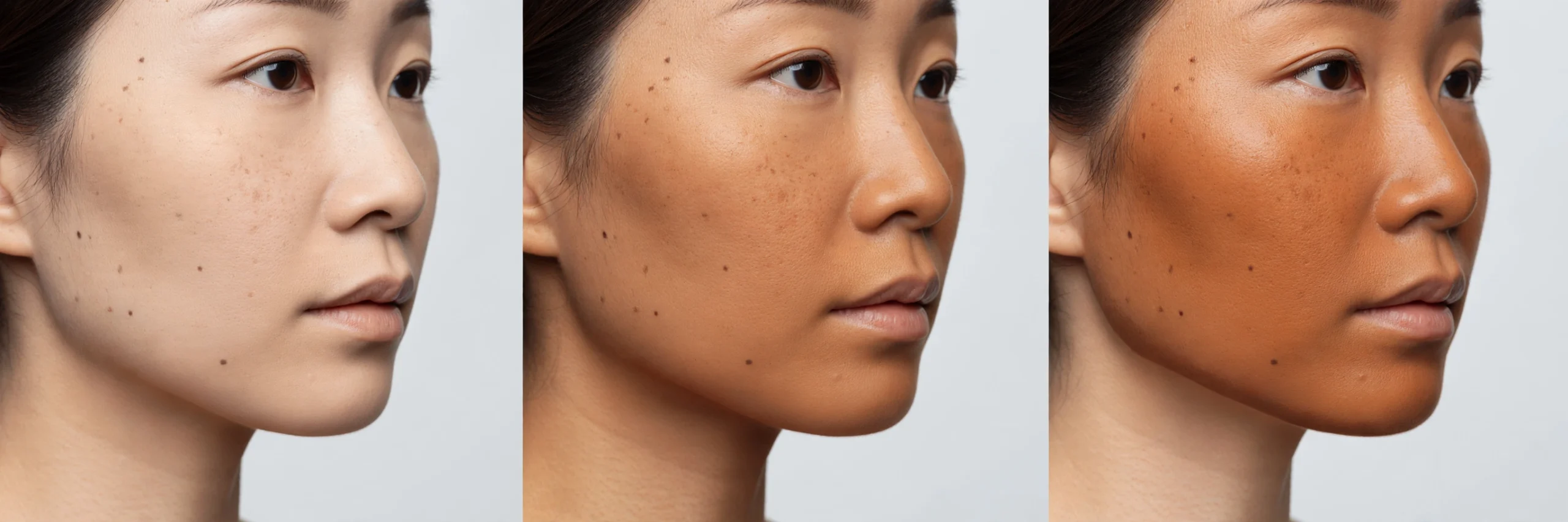
Is this really oxidation? The mechanism, with the evidence labeled
This is the core of the article, so let’s be precise about what is demonstrated, what is plausible, and what is just a story that sounds right. Where it matters, the evidence level is stated in the text.
Demonstrated evidence. The most directly relevant published source is a January 2026 “Dear Valerie” column by cosmetic chemist Valerie George in Happi (Household & Personal Products Industry), written after she consulted Jane Hollenberg — the author of Color Cosmetics: A Practical Guide to Formulation and a leading pigment expert. George describes the orange-shift problem as she’d seen it in her own formulation work: red iron oxides that “weren’t getting adequately wetted” during manufacturing “wetted out over time in stability, causing the cream to shift orange and darker in appearance.” Crucially, she adds that the same thing can happen once the product is on skin: “the sebum from skin can further wet out the red iron oxides.” Her verdict on the popular theories is blunt: the common online perception that orange shift comes from pH drift or oxidation is, in her experience, usually wrong. Iron oxides are relatively stable to heat under ordinary user conditions, and she notes that the pH-caused drift formulators actually know about — black iron oxide shifting red — occurs only below about pH 5.5, while most foundation formulas sit in a range that avoids it. (Read George’s column.)
Formulator research. A pigment supplier, Uni-Powder, published its own research on base-makeup darkening (via the Covalo blog), and it identifies three contributors — all of them physical rather than chemical. First, as the emulsion dries, the foundation loses weight; reduced gloss and diminished coverage follow, and the rougher, drier film scatters and refracts less light, so it looks duller and darker. Second, sebum secretion: when sebum from the skin mixes with the foundation, it changes the light’s refractive index. Before sebum is present, light travels through air to reach the foundation surface; once sebum is in the film, light passes through sebum instead, which has a higher refractive index than air — so less light reflects back to the eye and the foundation appears darker. Third, color perception itself: the human eye is more sensitive to red, so foundations with a reddish hue show noticeable darkening more readily. Be transparent about what this source is: a pigment supplier’s own formulator research, presented on an industry blog. It is evidence from people who manufacture the ingredients — valuable, but not independent peer-reviewed science. (Read the Uni-Powder piece.)
Expert interpretation. Formulator Juliet Raphael, in a post written for fellow formulators on LinkedIn, frames what consumers call oxidation as several overlapping formulation factors: iron oxides that aren’t properly coated or dispersed can react with oils and environmental factors; poor pigment dispersion means some areas change faster than others; certain oils in the formula are more prone to oxidation and can deepen the tone; and sebum can dissolve parts of the formula and redistribute pigment. She also notes pH, sweat, and humidity as influences on pigment behavior and film integrity. This is expert interpretation — a formulator’s working model of the problem, not a controlled study — and it’s worth weighing as such. (Cited without a link: LinkedIn posts are unstable as references, but the content is on the public record under her name.)
Practical troubleshooting inference. Pulling these together, the reasonable inference for on-face darkening is this: what you’re seeing is usually an interaction between the formula and your skin over time — pigments becoming more fully wetted, the film drying and losing its light-scattering structure, and sebum changing how light travels through the film. Any of these can make color read deeper and warmer with no chemical reaction taking place. A true chemical change of the pigments on your face within hours is the least supported explanation, not the default one.
The limitation, stated plainly. There is no broad body of peer-reviewed literature dedicated to the consumer “foundation oxidation” mechanism. What exists is formulator knowledge — people who make these products describing what they’ve observed in stability testing and wear testing — plus expert interpretation of that knowledge. This article synthesizes those sources. It does not replace the apple analogy with a new oversimplification; where the mechanism is plausible rather than proven, it’s labeled as such.
One clarifying fact about the ingredients themselves. The pigments doing the color work in your foundation — iron oxides, titanium dioxide, zinc oxide — are standard, long-regulated color additives. The FDA lists iron oxides (21 CFR 73.2250) as permitted for cosmetics generally, including eye-area use. That tells you these are conventional, regulated pigments — it is not evidence for or against any darkening mechanism, and it shouldn’t be read that way. (FDA: color additives permitted in cosmetics.)
When it happens is your biggest clue
Different causes operate on different timelines. So instead of asking “why does my foundation oxidize,” ask “when does it change?” Use these as observation checkpoints for self-diagnosis — things to notice about your own face across a normal day — not as universal rules about how every foundation behaves.
- Immediately after application (the first few minutes). Most liquids darken slightly as they dry down: volatiles evaporate, the film sets, gloss drops. If the shift happens here and then stops, you’re seeing the Uni-Powder drying mechanism — judge every shade after dry-down, never at application.
- Several minutes in. If color keeps drifting warmer after the formula has set, sebum is entering the picture: your skin’s oils begin wetting out the red iron oxides further — warmer, deeper (George).
- Around 30–60 minutes. The classic complaint window. By now sebum has mixed meaningfully into the film: light travels through sebum instead of air, less reflects back, and the same formula reads darker (Uni-Powder). More yellow grades of red iron oxide shift orange faster (George) — pigment grade matters.
- Several hours in. Sweat, accumulated sebum, and physical film breakdown compound. Oil phases can begin to change too — Raphael flags oil-phase reactivity as plausible, and Yeo notes oils and fats in makeup can turn rancid after reacting with oxygen. Hours-long darkening with shine and movement is a wear-and-interaction story, not one chemical event.
- Only in the oiliest areas. If your forehead and nose go orange while cheeks stay true, that’s a sebum-driven pattern — the strongest evidence that skin interaction, not the formula alone, is doing it.
- Only indoors, or only in certain light. Step outside or change rooms: if the orange disappears, nothing changed on your face — it’s a lighting effect, and no formula change will fix it.
- Only on heavy-moisturizer days, or only over one specific product. Then the cause is sitting under the foundation, not in it — the most commonly missed diagnosis (see “The skincare and moisturizer angle”).
Notice what this timeline gives you: a way to separate a dry-down shift (minutes, normal, expected) from a sebum-driven shift (tens of minutes to hours, interaction) from a wear/breakdown shift (hours, compounded) — each pointing at a different change to make.
The decision tree: where is the darkening happening?
Find the row that matches what you see: what the observation likely means, and what to test first.
| What you observe | What it likely means | What to test / change first |
|---|---|---|
| Orange or too-dark from the very first minute — it never matched, in any light | Shade mismatch (wrong shade or undertone). Nothing changed over time, so this is not a darkening problem. | Exit this article: re-match your shade properly (jaw swatch, natural light, after dry-down). Do not try to “fix” it with technique. |
| Looked right at application; darkens over the day on your face, but a hand swatch made at the same time stays stable | Sebum/skin interaction: pigment wetting (George/Hollenberg) and refractive-index shift as sebum mixes into the film (Uni-Powder) | Run the timed swatch test below. Then see the sebum-interaction row in “What to change.” |
| The first pump looks darker or more orange than when the bottle was new; the product is months old | Aging in the bottle — distinct from on-face change. Paula Begoun has noted that the longer you keep a foundation, the more likely it is to oxidize, becoming especially obvious after about the half-year mark. | Replace the product. Do not generalize this to what happens on your face within a day — they’re different phenomena. |
| Looks wrong only indoors, under office light, or in photos — fine in daylight and your home mirror | Lighting and camera interaction, not a formula change. Nothing is happening to the makeup on your skin. | This is not an oxidation problem. Read why your face looks white in flash photos to understand the camera/lighting side. |
| Darkening happens only on heavy-moisturizer days, or only over one specific serum, primer, or sunscreen | Skincare interaction: excess product under the foundation is destabilizing the formula | Audit what’s underneath before blaming the foundation — see “The skincare and moisturizer angle.” If you suspect one specific layer, use how to isolate which layer is causing it to test layers one at a time. |
If no row fits, the timed swatch test below will generate the observation you need.
The timed swatch test
This is a small, controlled protocol that tells you whether the darkening lives in the formula or in the interaction between the formula and your skin. It takes one normal day and costs nothing.
What you need: your foundation, your normal routine, and consistent lighting (a window with indirect daylight is ideal — use the same spot every time).
The protocol:
- Apply foundation as usual — over your normal routine, including sunscreen. Do not skip, reduce, or move sunscreen for this test; sun protection is never the variable.
- Place three control swatches at the same time: jawline (oily, warm, real conditions), back of hand (skin, but less oily and cooler), and a white card or tissue (no skin — the formula alone).
- Observe all three in the same lighting at three checkpoints: fresh, ~30 minutes, and several hours. A quick phone photo at each checkpoint helps — keep lighting and distance consistent.
- Across sessions, change one variable at a time: one day your normal routine, another a lighter moisturizer layer, another setting powder in the T-zone. Never change two things at once.
On sunscreen, explicitly: never skip or reduce it for this test. Want a sunscreen-free swatch? Use the white card, or the back of your hand outside the SPF area — or simply run the test over your normal fully-sunscreened routine, the most realistic condition anyway.
How to read the results:
- All three swatches darken together (face, hand, and card): the shift lives in the formula — dry-down, volatile loss, pigment behavior independent of your skin.
- Only the face swatch darkens; hand and card stay stable: skin interaction — sebum wetting pigments and changing the film’s optics. This is the George/Hollenberg + Uni-Powder story — and the most common outcome.
- Jaw darkens, hand stays stable: the oiliest skin wins — sebum concentration is the driver.
- Nothing darkens on the swatches, but your full face still looks orange by evening: suspect what’s under the foundation or the lighting you spend your day in — revisit the decision tree.
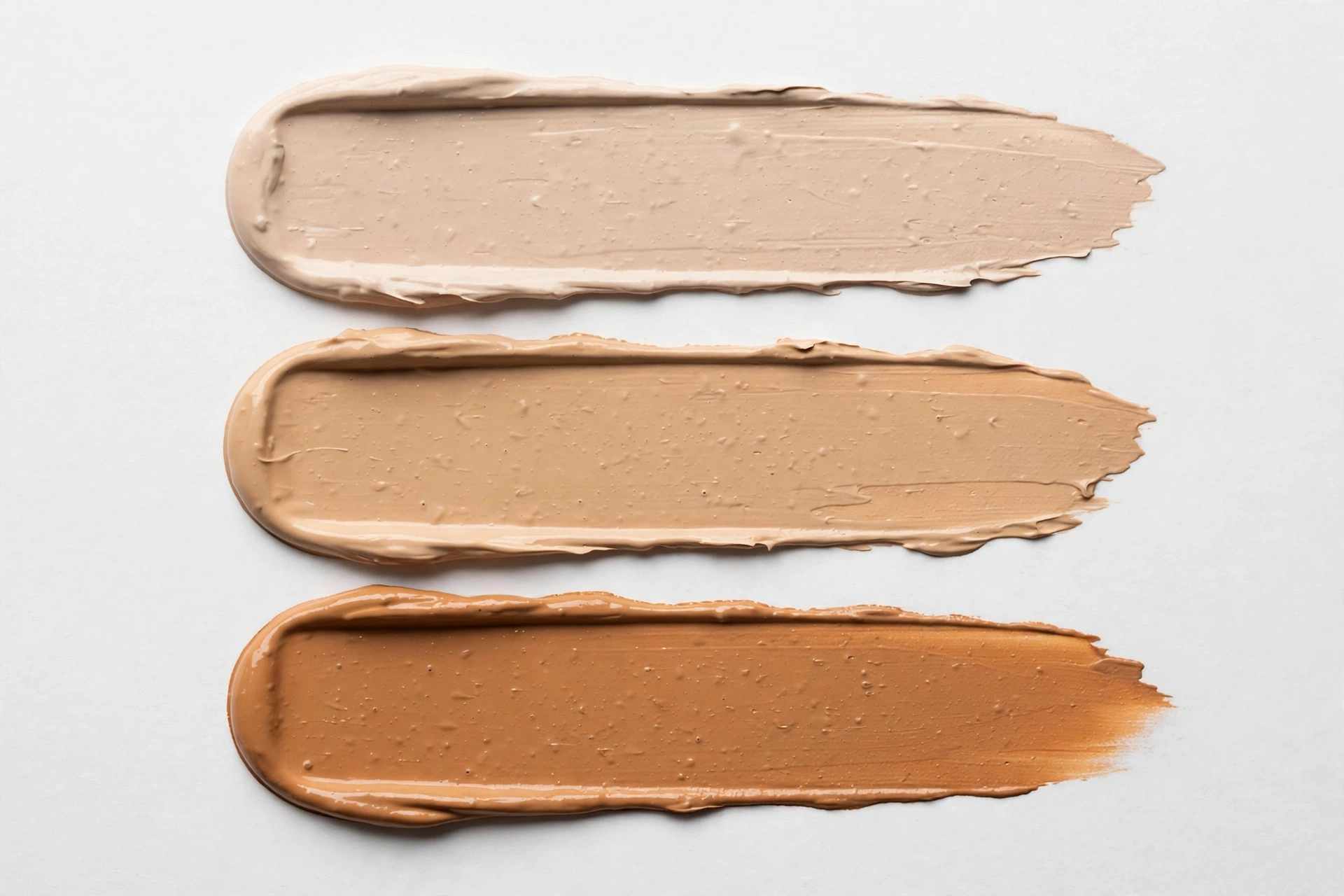
What’s actually shifting the color
With the diagnosis framework in place, here is the corrected mechanism — each piece attributed, each labeled for what kind of evidence it is.
1. Pigment wetting — demonstrated in formulator practice. Cosmetic chemist Valerie George, consulting pigment expert Jane Hollenberg, describes the core mechanism she’s observed: red iron oxide pigments that weren’t adequately wetted during manufacturing continue to wet out over time, “causing the cream to shift orange and darker in appearance” — and “the sebum from skin can further wet out the red iron oxides” once applied. Wetting isn’t a chemical reaction: pigment particles become more fully surrounded by oils, which changes how they interact with light — the red and yellow iron oxides become more visually prominent. George adds a practical detail: there are varying tones of red iron oxides, and the more yellow the iron oxide, the more it tends to shift a formulation orange. So two foundations in the “same” shade can darken differently depending on the pigment grade inside.
2. Refractive-index shift from sebum — formulator research. Uni-Powder’s research describes a purely optical mechanism: when sebum mixes into the foundation film, light reaching the film travels through sebum rather than air. Sebum has a higher refractive index than air, so the light’s path changes and less of it reflects back toward your eye. The foundation looks deeper and darker — with no chemical change to any pigment. Plausible and physically coherent — but formulator research, not independent science.
3. Emulsion drying and volatile loss — formulator research. The same Uni-Powder research measured the drying process directly: as the emulsion volatilizes, the foundation loses weight, gloss drops, coverage diminishes, and the film’s surface becomes rougher. A rougher, drier film scatters and refracts less light, which reads as duller and darker. This is the mechanism behind the normal, expected dry-down shift in the first minutes — and the reason you should always judge a shade after it sets, not at application.
4. Oil-phase reactivity — expert interpretation, plausible mechanism. Formulator Juliet Raphael notes that certain oils in a formula are more prone to oxidation than others, and that when they oxidize they can deepen the tone and affect stability. Makeup artist Larry Yeo makes the same point from the practitioner’s side: ingredients like oils and fats in makeup can become rancid after reacting with oxygen. This is a plausible mechanism — fats and oils do oxidize — but it is presented by its sources as a contributing factor in wear over hours, not the primary explanation for the classic “orange by evening” pattern. Label it accordingly: plausible, not proven, and secondary.
5. The pH nuance — demonstrated, and it rules something out. Here’s where precision kills a popular myth. The pH-driven color drift that formulators actually know about is specific: black iron oxide shifts toward red below about pH 5.5 — but, per George (via Hollenberg), most foundation formulations are kept in a suitable range to avoid exactly this. And the “your skin is too acidic” theory fails on basic facts: all healthy skin is acidic. As the beauty publication Project Vanity puts it, normal healthy skin carries an acid mantle with a pH around 4.2–5.6 — acidity is the default state, not a personal quirk — though individual oiliness varies. A property everyone shares can’t explain why only some people see dramatic darkening. (Project Vanity on the acidic-skin theory.)
6. Perception — demonstrated. Uni-Powder’s research includes a point about the observer, not the formula: the human eye is more sensitive to red, so foundations with a reddish hue show noticeable darkening more quickly and more obviously. Part of “turning orange” is that warm shifts are simply easier to see than cool ones. This doesn’t make the problem imaginary — it means warm-toned wearers notice a real shift sooner.
Myths that mislead
“It’s like a cut apple turning brown.” This is the analogy nearly every article reaches for, and it’s the one this article asks you to retire. An apple browns through enzymatic oxidation — a specific chemical reaction in living plant tissue. Iron oxide pigments in a cosmetic emulsion don’t undergo that chemistry on your face within hours. The analogy survives because it’s vivid, not because it’s accurate. What users call oxidation may often involve wetting, drying, and optical shifts — real phenomena, but not apple chemistry. Dropping the analogy isn’t pedantry; it’s what lets you pick the right fix.
“Your skin is too acidic.” As established above: everyone’s healthy skin is acidic (pH roughly 4.2–5.6, per Project Vanity), and the one pH-driven pigment shift formulators know about requires conditions below pH 5.5 that commercial formulas are designed to avoid (per Hollenberg, via George). “Acidic skin” as a personal diagnosis explains nothing — it’s a property of all skin. What does vary between people is oiliness, which is a different thing entirely.
“Water-based foundations oxidize less” (and similar universal rules). There is no universal rule of this kind in any of the formulator sources. Whether a foundation darkens on you depends on its pigment grade and dispersion, how its emulsion dries, and how it meets your sebum — not on whether the label says water-based, silicone-based, or anything else. Any rule that sorts every foundation into “will darken” and “won’t” by a single label is selling certainty that doesn’t exist.
“It’s oxidizing in the bottle” (as an explanation for on-face change). These are two different phenomena that share a word. What Paula Begoun describes — a foundation becoming more likely to oxidize the longer you keep it, especially past about six months — is about an aging product in its container, and her advice is to replace old product. That is real and worth acting on. But it doesn’t explain why a fresh bottle darkens on your face by 3 p.m. Conflating the two leads people to throw away good foundation instead of diagnosing the actual interaction.
None of these corrections require naming or attacking any particular publication. These myths belong to the whole internet; correcting them is about the evidence, not the authors.
What to change, based on your diagnosis
Match your row from the decision tree to the change below. Change one thing at a time — the same discipline as the swatch test.
| Your diagnosis | Change first | What NOT to do |
|---|---|---|
| Shade mismatch (wrong from minute one) | Re-match properly: swatch on the jaw, check in natural daylight and indoor light, and judge only after full dry-down. | Don’t buy a lighter shade to “compensate” — you’ll just own the wrong shade in a different direction. |
| Sebum/pigment interaction (face darkens, hand swatch stable) | Thin, even application; manage oil strategically in the T-zone (blotting, light setting where you get oily); let the formula fully dry down before judging the color. If the drift is repeatable and measured, you can account for it when choosing a shade — a deliberate choice, not a guess. | Don’t pile on more product to “cover” the darkening — thicker films interact more, not less. |
| Dry-down darkening (shift happens in the first minutes, then stops) | Judge every shade after several minutes of wear, not at application. When testing new foundations, wait before deciding. | Don’t mistake the dry-down shift for ongoing oxidation and keep chasing it all day. |
| Skincare interaction (only on heavy-moisturizer days or over a specific layer) | Simplify what’s underneath: moisturize where needed, let each layer absorb or set before makeup, reduce the total number of layers. Sunscreen stays — it’s never the layer to cut. | Don’t strip your routine to nothing; the goal is the right amount in the right places, per the next section. |
| Aging in the bottle (first pump darker than when new; product months old) | Replace the product. | Don’t try to fix old product with technique — and don’t assume a fresh bottle will behave the same way on your face. |
| Lighting/camera (fine in daylight, wrong indoors or in photos) | No product change needed — understand the lighting. See why your face looks white in flash photos. | Don’t buy a new foundation to fix your office lighting. |
When it’s not oxidation at all
Three common misdiagnoses, each with its own article:
It looks heavier and more obvious as the day goes on, but the color hasn’t actually shifted. That’s a texture and wear problem — heaviness, dryness, settling — not a color problem. The diagnostic for that is why foundation looks cakey, which covers what’s happening when the issue is finish rather than shade.
In the mirror it’s fine; in photos it’s a different face. If the “orange” only appears under flash or certain indoor lighting, the formula on your skin isn’t changing at all — the camera and the light are. That’s covered in why your face looks white in flash photos.
The product is rolling, balling, or flaking — physically coming apart. That’s a layer-interaction problem, not a color-change problem, and it has its own isolation protocol: how to isolate which layer is causing it. Don’t treat pilling with color fixes.
The skincare and moisturizer angle
Here’s the contrarian view, and it deserves to be a primary diagnostic rather than an afterthought: makeup artist Larry Yeo, in a Q&A with Her World, argues that true oxidation of modern foundation formulas is less common than people think — and that when foundation darkens through the day, the first suspects should be what’s under it.
His first point: moisturize only where it’s needed, not the whole face by default. Sunscreen already carries moisturizing properties, and heavy multi-step routines tend to destabilize makeup by “oiling up” or turning it wet through the day. His second point: buildup — primer, corrector, sunscreen, foundation, powder layered like “a multi-layer cake on a moving surface.” He adds that oils and fats in makeup can become rancid after reacting with oxygen — connecting back to Raphael’s oil-phase reactivity point. (Read the Her World Q&A.)
This reframes the diagnosis. Before you blame the foundation’s chemistry, audit the canvas:
- Where are you moisturizing? If you’re applying a rich moisturizer across the entire face out of habit, try moisturizer only where your skin actually needs it, and give each layer time to absorb before makeup goes on.
- How many layers sit under the foundation? Serum, moisturizer, sunscreen, primer is already four — each a potential destabilizer.
- Does the problem track with heavy-skincare days? If yes, you’ve found your cause, and it’s the cheapest one to fix.
One boundary, stated clearly: “moisturize only where needed” refers to moisturizer, not sunscreen. Sunscreen is never the layer to reduce or skip — the timed swatch test in this article is explicitly designed so sun protection is never compromised. Yeo’s point is about excess product destabilizing the formula, not about cutting protection.
FAQ
Why does my foundation turn orange on me but not on other people?
Because the outcome depends on the interaction, not just the formula. The pigment grade in your specific shade (more yellow iron oxides shift orange faster, per George), how much sebum your skin produces, where you apply it, and what’s layered underneath all vary person to person. The same foundation can be stable on one face and drift on another — which is why the timed swatch test compares your face against controls instead of against someone else’s experience.
Is it oxidation, or is it my skin’s pH?
Almost certainly not your pH. All healthy skin is acidic (around pH 4.2–5.6), so acidity can’t explain why only some people see dramatic darkening. And the one pH-driven pigment shift formulators know about — black iron oxide shifting red below about pH 5.5 — is something commercial formulas are designed to avoid. On-face darkening is better explained by pigment wetting and optical shifts as sebum mixes into the film.
Can foundation oxidize inside the bottle?
Yes — but that’s a different phenomenon from what happens on your face during the day. Paula Begoun notes that the longer you keep a foundation, the more likely it is to oxidize, becoming especially noticeable after about the half-year mark; her advice is to replace old product. If the first pump looks darker than when the bottle was new, replace it — and don’t assume that explains daytime darkening from a fresh bottle.
Do water-based foundations oxidize less than silicone-based ones?
There is no universal rule of this kind. Whether a foundation darkens on you depends on its pigment grade and dispersion, how its emulsion dries down, and how it interacts with your sebum — not on a single “water-based” or “silicone-based” label. Be skeptical of any advice that sorts all foundations this way.
Will setting powder stop my foundation from turning orange?
It can help with the sebum-driven part: less oil mixing into the film means less of the wetting and refractive-index shift that deepens the color. But powder won’t fix pigment wetting that happens anyway, poor pigment dispersion in the formula, or a dry-down shift — and heavy powder brings its own texture problems. Treat it as oil management, not a cure.
Should I just buy a lighter shade to compensate for the darkening?
Only if you’ve measured the drift and it’s repeatable. If your timed swatch test shows the same foundation consistently deepening by the same amount on your face, choosing a shade that accounts for it is a deliberate decision. Buying lighter blindly — without diagnosing first — usually just moves the mismatch around.
Why does it only turn orange on my forehead and nose?
Because that’s where your sebum is. A pattern that follows your oiliest zones, while a hand swatch stays stable, is the strongest evidence that skin interaction — sebum wetting pigments and changing the film’s optics — is driving your darkening. Manage oil in those zones rather than changing the whole routine.
Is the cut-apple analogy accurate?
No. An apple browns through enzymatic oxidation in living plant tissue; iron oxide pigments in a cosmetic film don’t undergo that chemistry on your face within hours. What looks like oxidation is usually pigment wetting, emulsion drying, and optical shifts — real phenomena, but not apple chemistry. Retiring the analogy is what lets you pick the right fix.
Sources
- Valerie George, “Avoiding Foundation Color Change,” Happi / Household & Personal Products Industry, January 1, 2026 — cosmetic chemist’s column, written after consulting pigment expert Jane Hollenberg, on iron oxide wetting, pH drift (black iron oxide below ~pH 5.5), and sebum effects. https://www.happi.com/avoiding-foundation-color-change/
- Same column via the Free Library (alternate access to the Hollenberg consultation and pH discussion). https://www.thefreelibrary.com/Avoiding+Foundation+Color+Change%3a+A+reader+seeks+advice+about+why…-a0872927718
- Uni-Powder formulator research, “How to Prevent Base Makeup from Darkening,” via the Covalo blog — emulsion drying and volatile loss, sebum altering refractive index, and red-sensitivity of color perception. A pigment supplier’s own research; valuable formulator evidence, not independent peer review. https://blog.covalo.com/personal-care/how-to-prevent-base-makeup-from-darkening-a-step-by-step-guide-with-uni-powder
- Juliet Raphael, “Understanding Foundation Oxidation in Color Cosmetics” — formulator’s expert-interpretation post (LinkedIn) on pigment dispersion, oil-phase reactivity, sebum interaction, and pH/environmental factors. Cited without link; LinkedIn posts are unstable as references.
- Q&A with makeup artist Larry Yeo, Her World Singapore — “the oxidisation of makeup foundations is less common these days”; moisturizer excess and product buildup as primary suspects; oils and fats becoming rancid after reacting with oxygen. https://www.herworld.com/style/beauty/makeup/qa-singapore-makeup-artist-larry-yeo-does-foundation-really-oxidise
- Project Vanity, “Why does your foundation oxidize?” — the acidic-skin correction: all healthy skin is acidic (pH ~4.2–5.6); variation is in oiliness, not acidity. https://www.projectvanity.com/projectvanity/oxidation
- The List, “Here’s Why Your Foundation Looks Orange” — quoting Paula Begoun (Paula’s Choice) on oxidation in the bottle over months and replacing old product. Attributed narrowly to bottle aging; not generalized to on-face darkening. https://www.thelist.com/280228/heres-why-your-foundation-looks-orange/
- U.S. Food & Drug Administration, “Color Additives Permitted for Use in Cosmetics” — iron oxides (21 CFR 73.2250) listed for cosmetics generally, including eye-area use. Cited only to establish iron oxides as conventional regulated pigments, not as mechanism evidence. https://www.fda.gov/cosmetics/cosmetic-ingredient-names/color-additives-permitted-use-cosmetics
A note on the evidence: there is no broad peer-reviewed literature dedicated to the consumer “foundation oxidation” mechanism. This article synthesizes formulator sources (people who manufacture and formulate these products) and expert interpretation of their observations. Where a mechanism is plausible rather than demonstrated, the article says so.
1 thought on “Why Does My Foundation Turn Orange? How to Tell What’s Really Darkening It”
Comments are closed.